
Eco-Friendly Homemade Cleaners for New Moms
The essence: safer cleaning supports newborn health, reduces household waste, saves money, and lets caregivers tailor products for sensitivities. Below are practical, evidence-based recipes, ingredient roles, safety measures, daily routines, and sourcing tips tailored to a new parent who prefers DIY, home-made, and home-grown solutions.
Why switch to natural home cleaners and core ingredients explained
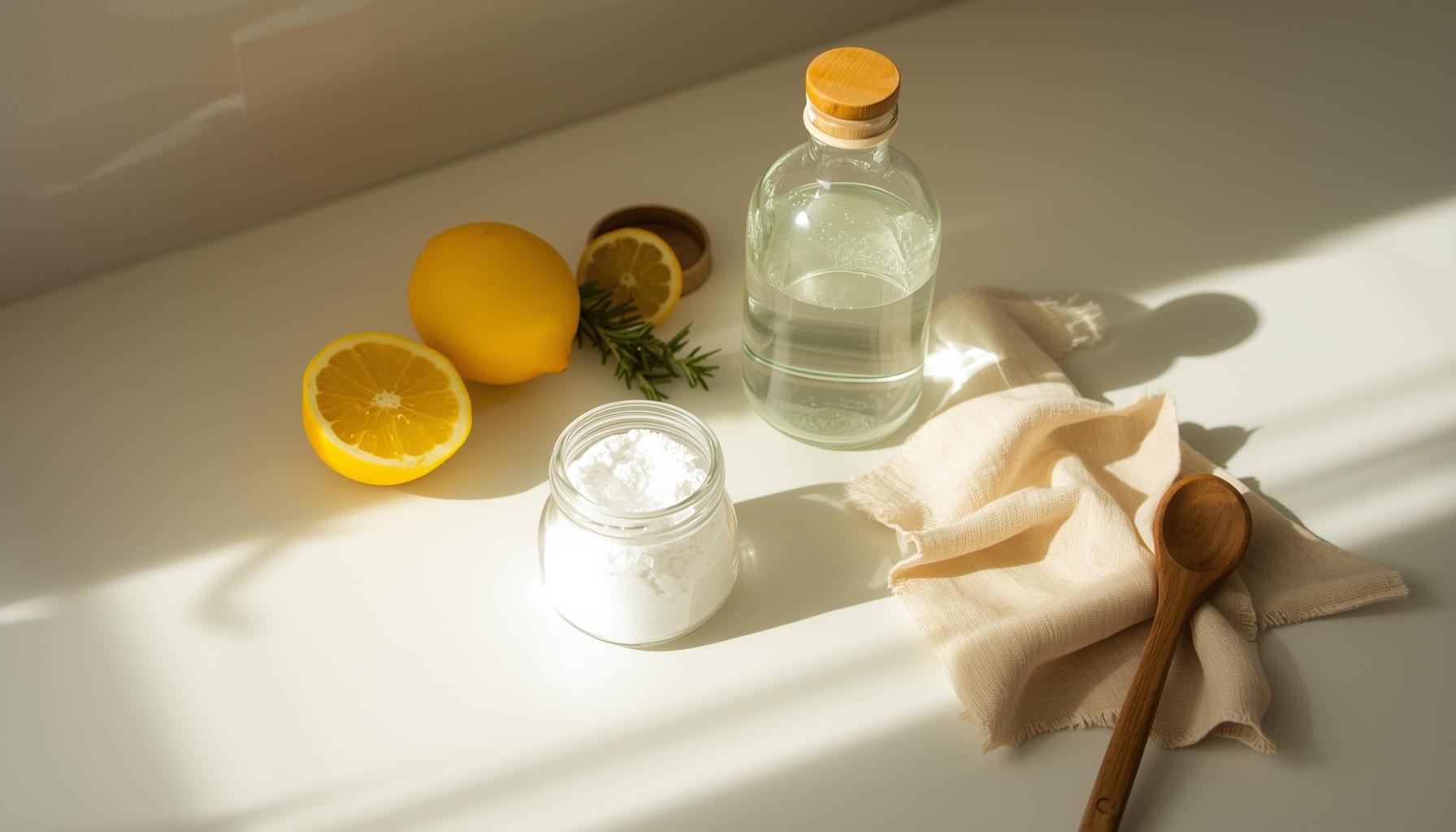
Choosing greener cleaning replaces harsh chemical residues with familiar compounds that have proven utility. Household white vinegar at about 5% acetic acid works well as a mild descaler and grease cutter but should never be used on marble, granite, or waxed wood. Sodium bicarbonate serves as an abrasive deodorizer for sinks, laundry pre-treating, and oven grime. Castile soap, a plant-oil based surfactant, dissolves oils and lifts dirt when diluted; typical dilutions are 1–2 tablespoons per cup of water for general cleaning. Hydrogen peroxide in 3% strength is an accessible oxidizer and low-risk disinfectant for non-porous surfaces; it breaks down into water and oxygen so it leaves no lasting toxic residue. Citrus peels and kitchen herbs add solvent power and aroma; oils such as lemon contain limonene, a solvent for sticky residues, but limonene can oxidize and become an irritant if not stored properly. Safe substitutes to avoid include unlabeled commercial concentrates and products containing quaternary ammonium compounds in continuous use around infants.
Below is a compact reference of common ingredients, typical household strengths, primary uses, and infant-safety notes for quick comparison.
| Ingredient | Typical household strength | Primary uses | Infant-safety notes |
|---|---|---|---|
| White vinegar | 4–6% acetic acid | All-purpose cleaner for tile, glass, mild limescale | Avoid on natural stone; use well-diluted; keep out of reach |
| Baking soda | Powdered sodium bicarbonate | Abrasive scrubbing; deodorizer; laundry booster | Inert and low-risk; rinse well from surfaces |
| Castile soap | Concentrate (liquid) | Surface cleaner, hand soap, floor cleaner when diluted | Gentle for skin; avoid eye contact |
| Hydrogen peroxide | 3% | Disinfecting non-porous surfaces, sanitizing bottles | Use fresh; store in dark bottle; avoid combining with vinegar |
| Lemon oil / citrus peels | Fresh peels or 5–10% oil in carrier | Grease-cutting, scenting, mild solvent for adhesives | Use low concentrations; avoid undiluted essential oil exposure |
| Rubbing alcohol (isopropyl 70%) | 70% | Quick surface disinfectant for electronics and counters | Flammable; keep away from open flame and infants |
Practical recipes for everyday cleaning and sanitizing
Recipes below use widely available concentrations and avoid specialized equipment. Before applying to fabrics or finishes, test on an inconspicuous area for 24 hours.
All-purpose spray: combine 1 cup distilled water, 1 cup white vinegar, and 1 teaspoon unscented castile soap in a spray bottle. Use on counters, sealed laminate, and tile, wiping dry to avoid streaks.
Glass and mirror cleaner: mix 2 cups water, 1/4 cup white vinegar, and 1 tablespoon rubbing alcohol. Spray lightly and wipe with a lint-free microfiber cloth.
Natural degreaser: warm equal parts water and white vinegar with a tablespoon of grated castile soap for heavy stove-top grime. Apply, let sit 5–10 minutes, then scrub.
Wood floor cleaner: for sealed wood, use 1/4 cup castile soap per gallon of warm water. Avoid vinegar on unfinished or waxed wood to prevent dulling. For tile, add 1/2 cup vinegar to a gallon of water.
Bathroom cleaner and mild disinfectant: sprinkle baking soda on tub and tiles, spray 1:1 vinegar and water to activate fizzing, scrub, then rinse. For higher-level sanitizing, wipe surfaces with 3% hydrogen peroxide and let air dry.
Laundry booster and stain pre-treat: pre-soak whites in 1 cup baking soda plus hot water for 30 minutes before washing. For organic stains, apply a paste of baking soda and water then launder.
Baby bottle and toy sanitizer: clean with hot soapy water using castile soap, rinse, then submerge bottles in 3% hydrogen peroxide for 1 minute and rinse again, or use boiling water for 5 minutes where parts allow.
Safe handling, storage, scenting, and routines for busy caregivers
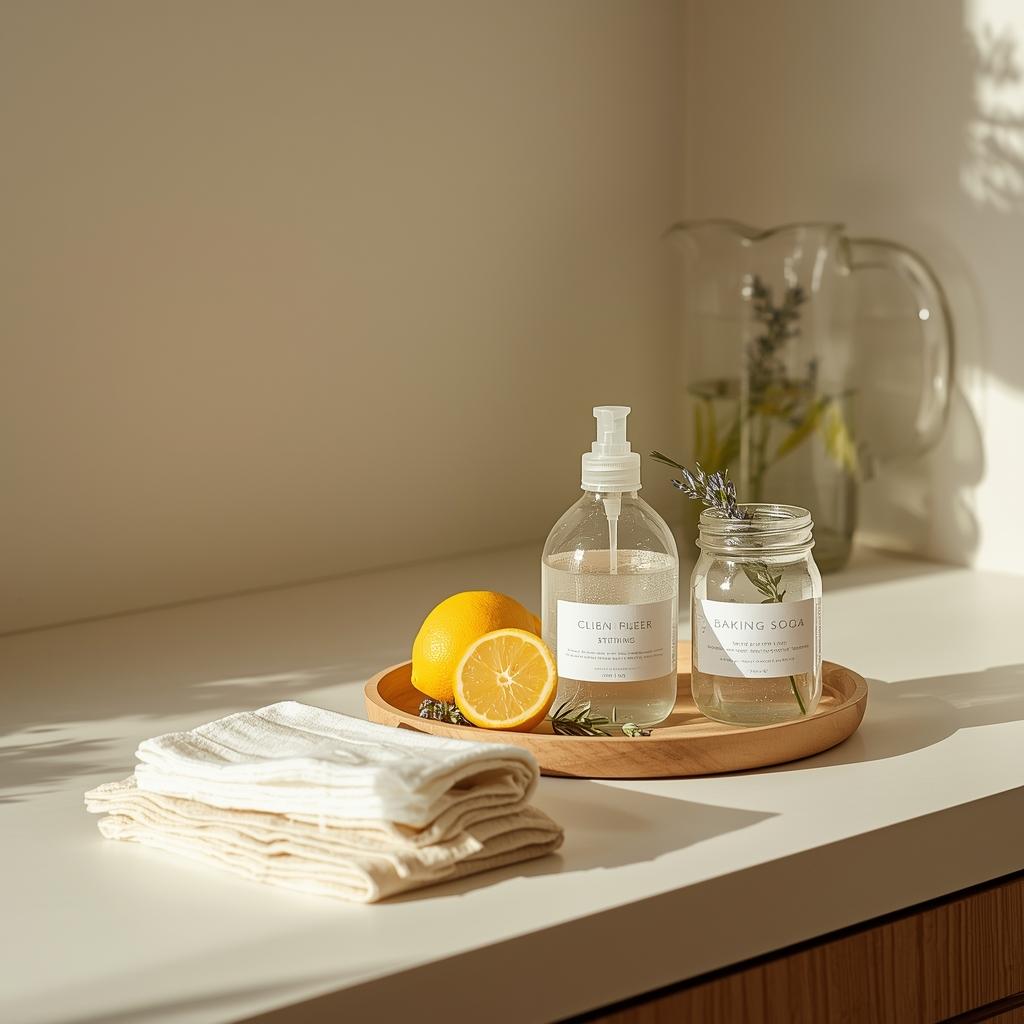
Label every container with contents, dilution date, and hazards and keep products above infant reach or in locked cabinets. Childproof spray bottles with screw caps prevent accidental spraying. Most homemade mixes last 1–2 weeks; hydrogen peroxide solutions degrade within 24–72 hours if exposed to light. Store peroxide in amber or opaque plastic and keep vinegar and soapy mixes in cool, shaded places. Use glass or PET containers for citrus oil blends to avoid plastic breakdown. Scale recipes by multiplying quantities and batching weekly for time savings.
Scenting around infants requires caution. Essential oils are potent; for infants under three months, avoid aerosolizing oils in occupied rooms. For older babies, dilute essential oils to 0.25–0.5% concentration for room mists and fabrics. Preferred mild choices include lavender and chamomile, used sparingly. Unscented options reduce the risk of respiratory irritation and are often best in nurseries.
A simple daily routine saves time and maintains hygiene: a 15-minute tidy each morning focusing on feeding surfaces, high-touch areas, and laundry keeps the home manageable. Schedule one deeper cleaning weekly: floors, bathroom sanitation, and laundering bedding. For nursing equipment, follow manufacturer cleaning instructions; sterilize pumps more frequently during infant illness.
Tools, safety thresholds, sustainability habits, and troubleshooting
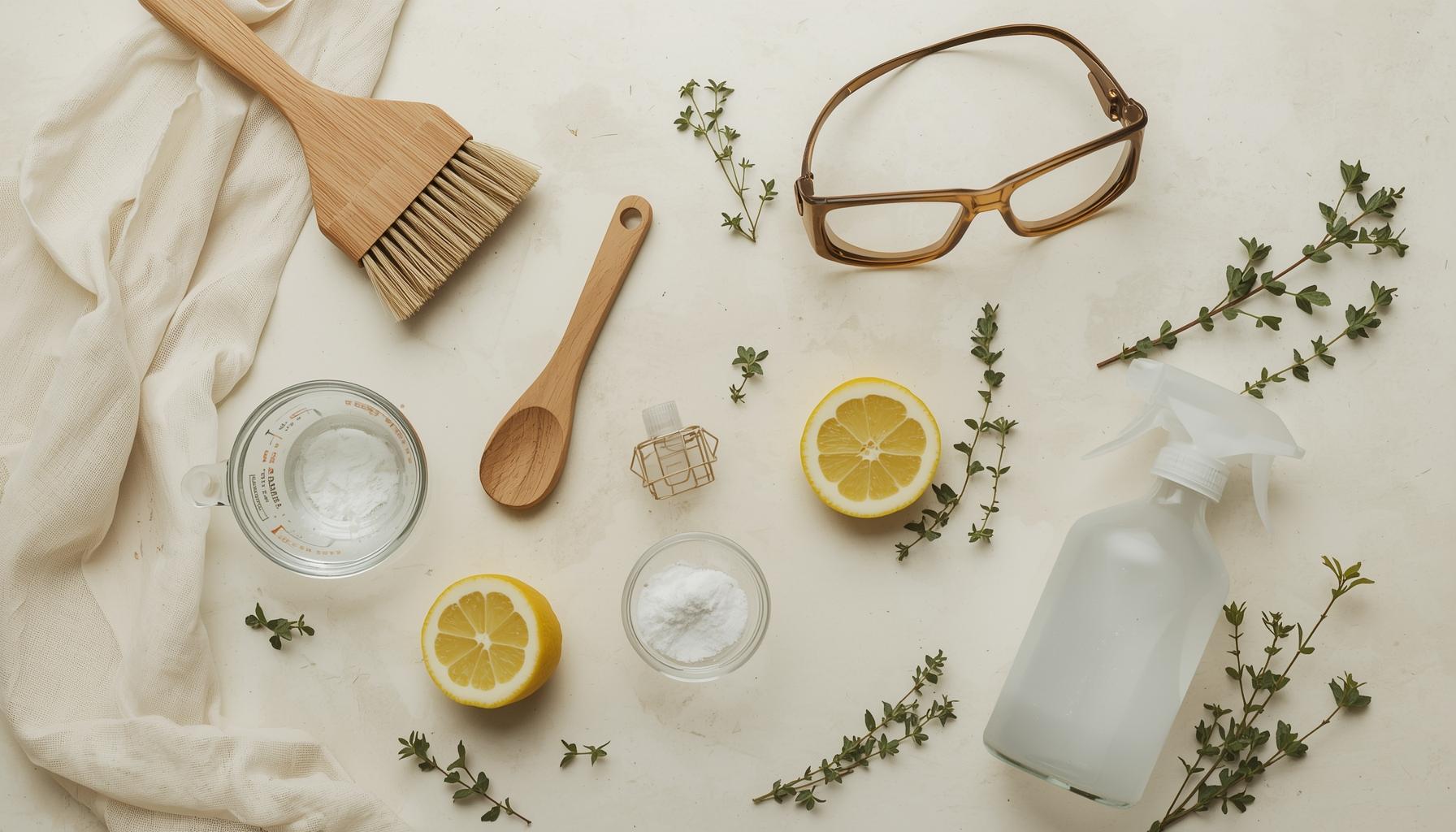
Invest in reusable microfiber cloths and mop pads to cut waste. Natural fiber brushes and cotton rags work well for gentle scrubbing. Buy base ingredients in bulk from local co-ops to reduce packaging and support ethical sourcing. Upcycle glass jars for concentrates and refill dispensers from bulk stations where available.
Differentiate cleaning from disinfecting: cleaning removes dirt; disinfecting kills pathogens. Use disinfectants such as 3% hydrogen peroxide or 70% isopropyl alcohol on hard surfaces when needed, for example after diaper leaks or when someone in the household is ill. Bleach (sodium hypochlorite) is effective but should be reserved for heavy contamination and used at proper dilutions with good ventilation. Keep emergency numbers for local poison control handy and store product MSDS information digitally.
Common issues and fixes include residue from soap builds up on dishes, resolvable by rinsing with hot water and a small amount of vinegar; hard water scaling remedied by periodic vinegar soaks; mold and mildew reduced by ensuring good ventilation and treating affected areas with hydrogen peroxide and thorough drying. For stubborn stains on baby clothes, use oxygen-based whitener per product instructions and avoid chlorine bleach on dyed garments.
Recommended starter supplies include castile soap (16 oz), baking soda (1 kg), white vinegar (2–4 liters), 3% hydrogen peroxide (500 ml), and several amber bottles for storage. Join local parent and DIY communities for recipe swaps and printable labels that help maintain safety and consistency while nurturing a low-waste, baby-safe home.